

A familiar chair.
A remarkable history.
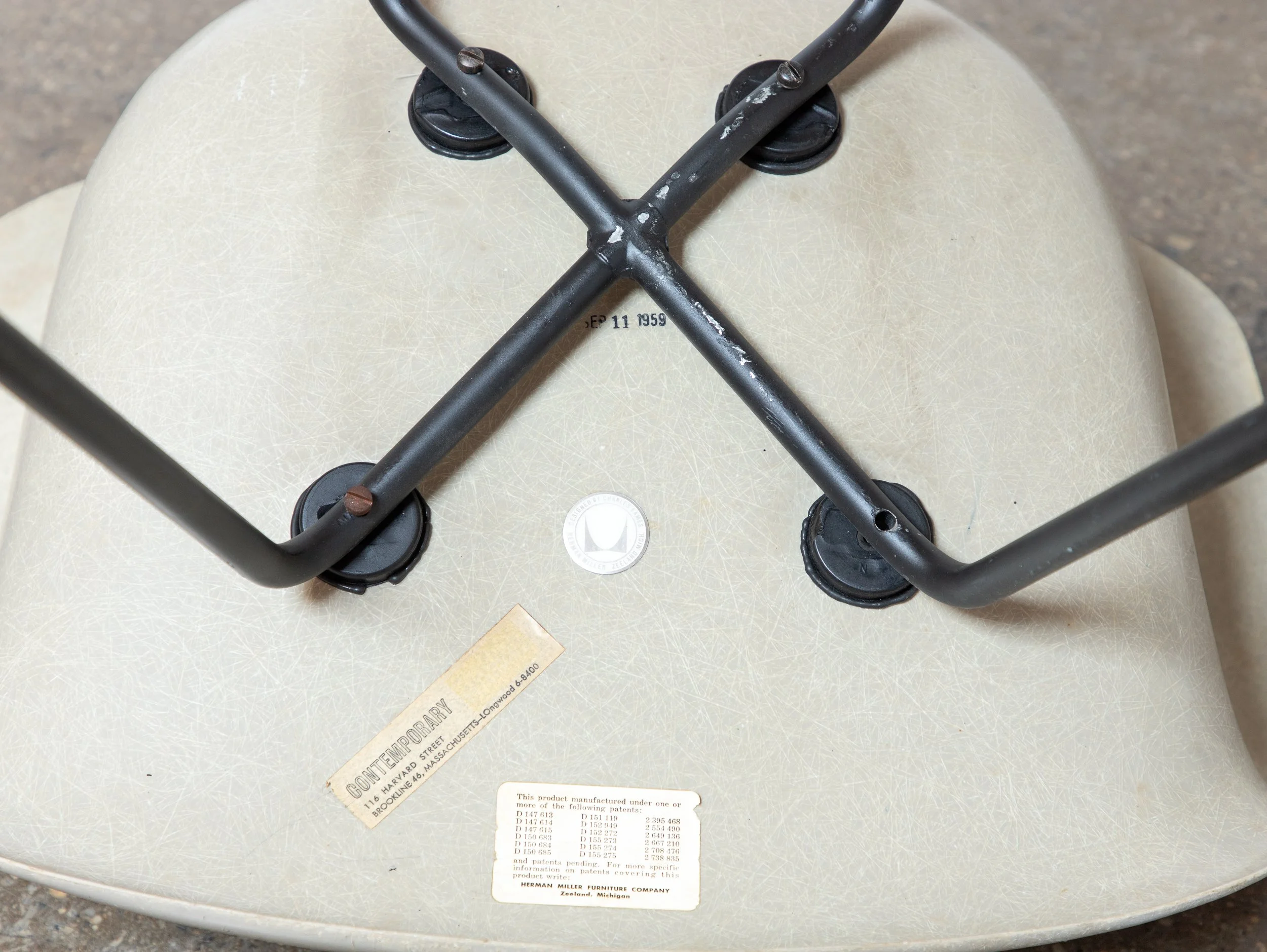
Every Eames generation tells a story.
The Eames shell chair occupies a curious position in twentieth-century design. It is among the most familiar furniture forms ever produced, yet close examination reveals an extraordinary degree of variation. Differences in color, material, construction, mounting systems, and bases accumulated over decades of production. What is often spoken of as a single chair is, in reality, a large family of related objects.
This guide was developed from the belief that these distinctions are worth understanding.
Charles and Ray Eames approached design as an ongoing process of refinement. Materials changed. Manufacturing methods improved. New solutions replaced old ones. Products already considered successful continued to evolve. The shell chair provides an unusually clear record of that process because so many examples survive.
When multiple generations are studied together, patterns emerge. Certain colors appear only during specific periods. Fiberglass compositions shift over time. Mounting methods are revised. Bases are introduced, modified, and discontinued. Details that seem minor in isolation become meaningful when viewed within a broader context.
The purpose of this guide is not to establish a hierarchy of objects, but to provide a framework for observation. The more carefully these chairs are examined, the more clearly the decisions behind them become visible. What initially appears straightforward reveals considerable complexity.
This, perhaps more than rarity, explains the enduring interest these chairs inspire among collectors, designers, and historians alike.
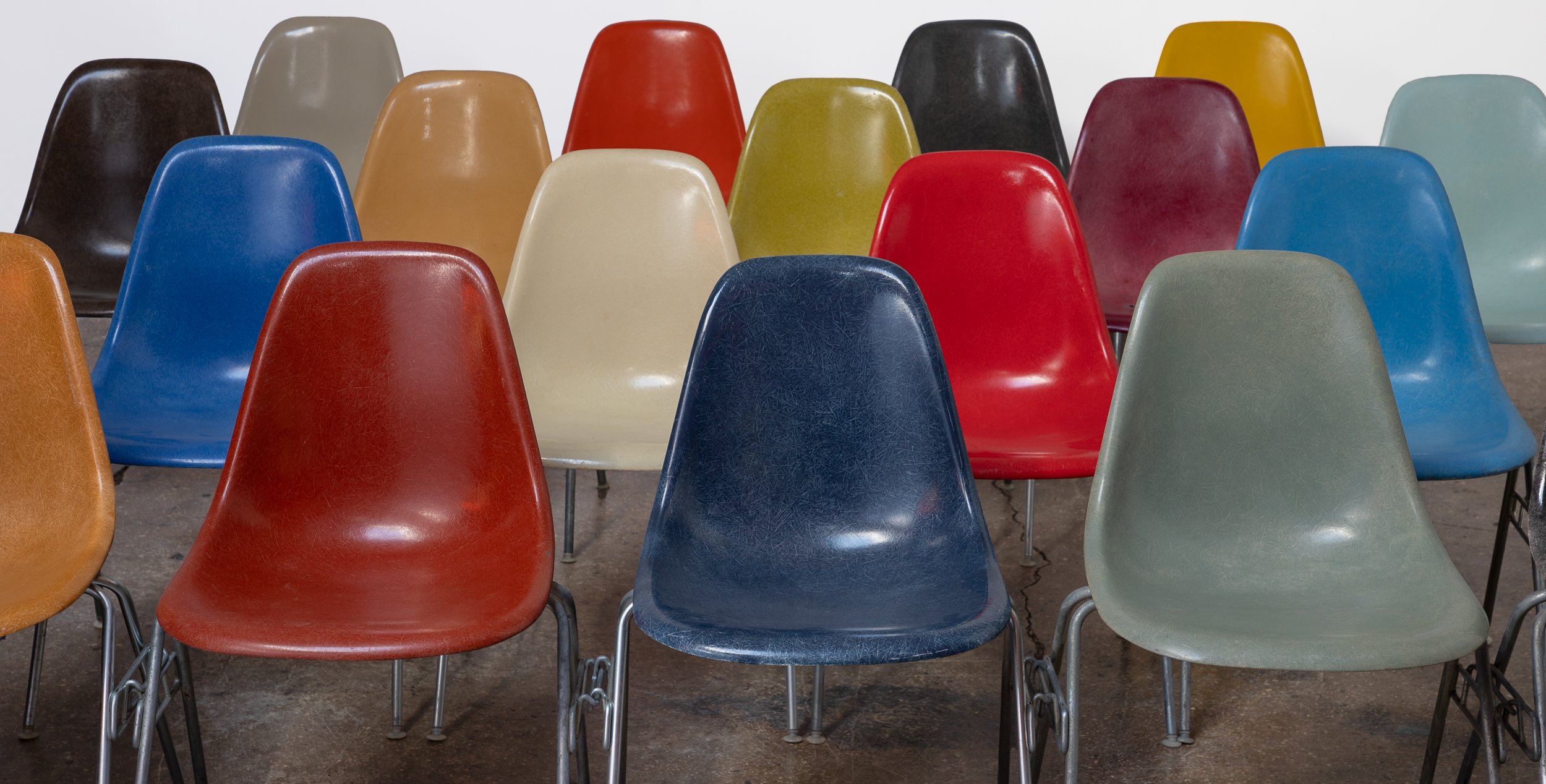
Building a Set?
Save when you purchase multiple Eames Shell Chairs.
The
difference is in the details.
Across every Eames piece—fiberglass, plywood, or full system—the signs of authenticity are there if you know where to look.
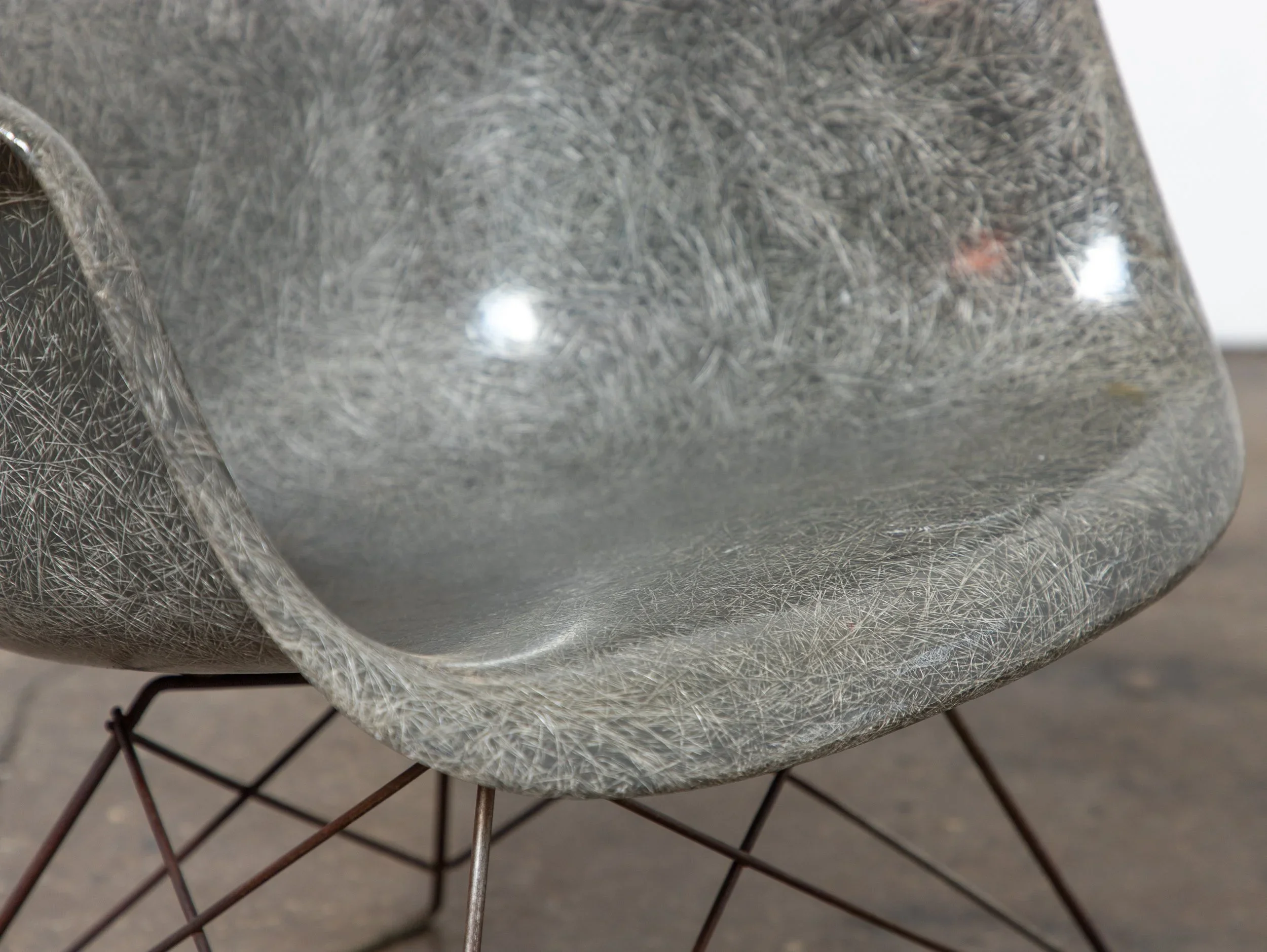
Original Fiberglass
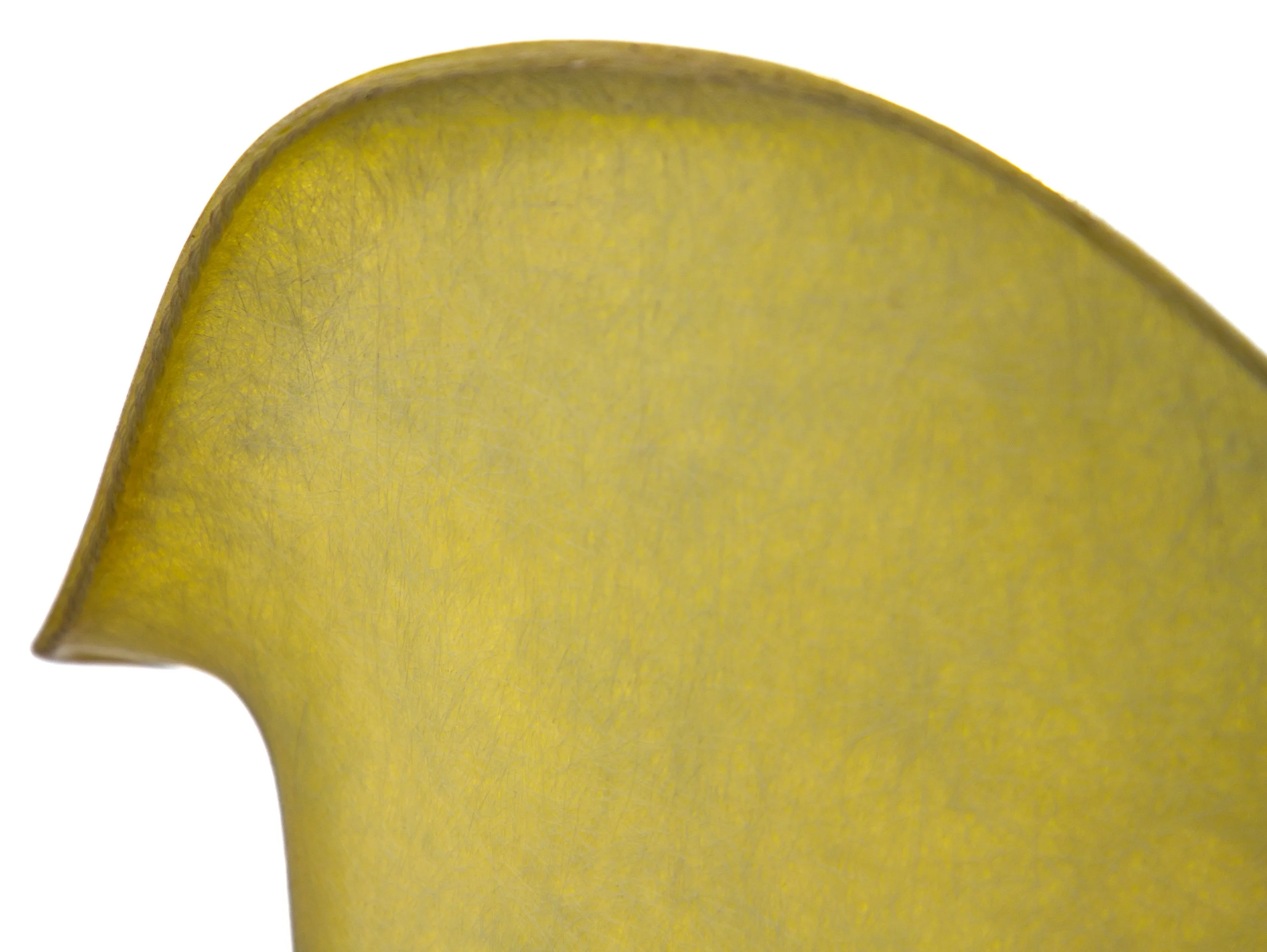
Authentic vintage shells have a depth and texture modern plastic can’t replicate. The fibers are visible. The surface has life.
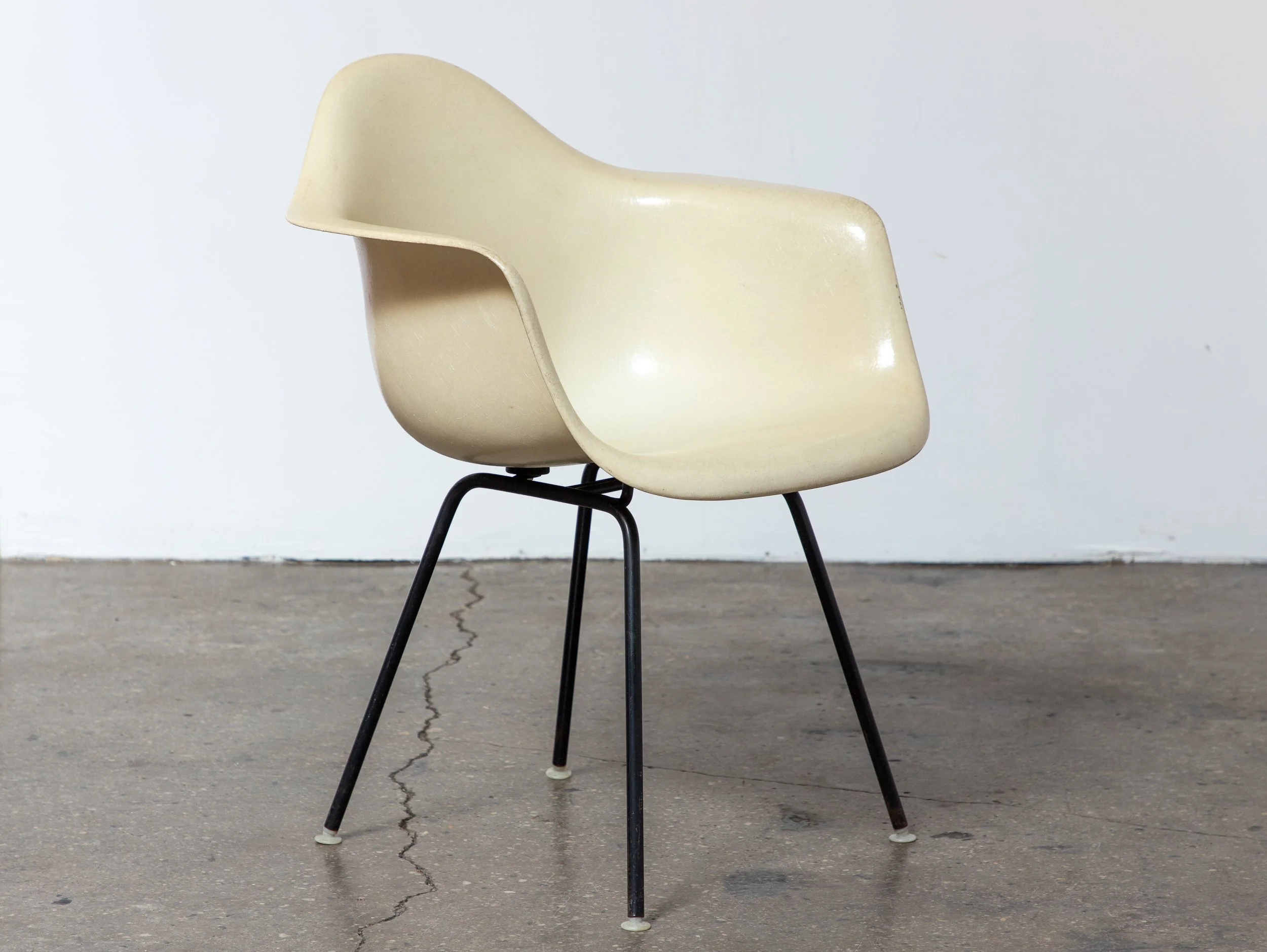
Period Details
Each generation reveals how Charles and Ray Eames refined materials, manufacturing, and production over time.
Correct Form
The profile, edge, curve, and seat geometry all matter. A real shell has the design intelligence of the original system.
Stamps and Labels
Labels, stamps, embossing, mounts, hardware, and base types help place each chair in its proper design and production context.
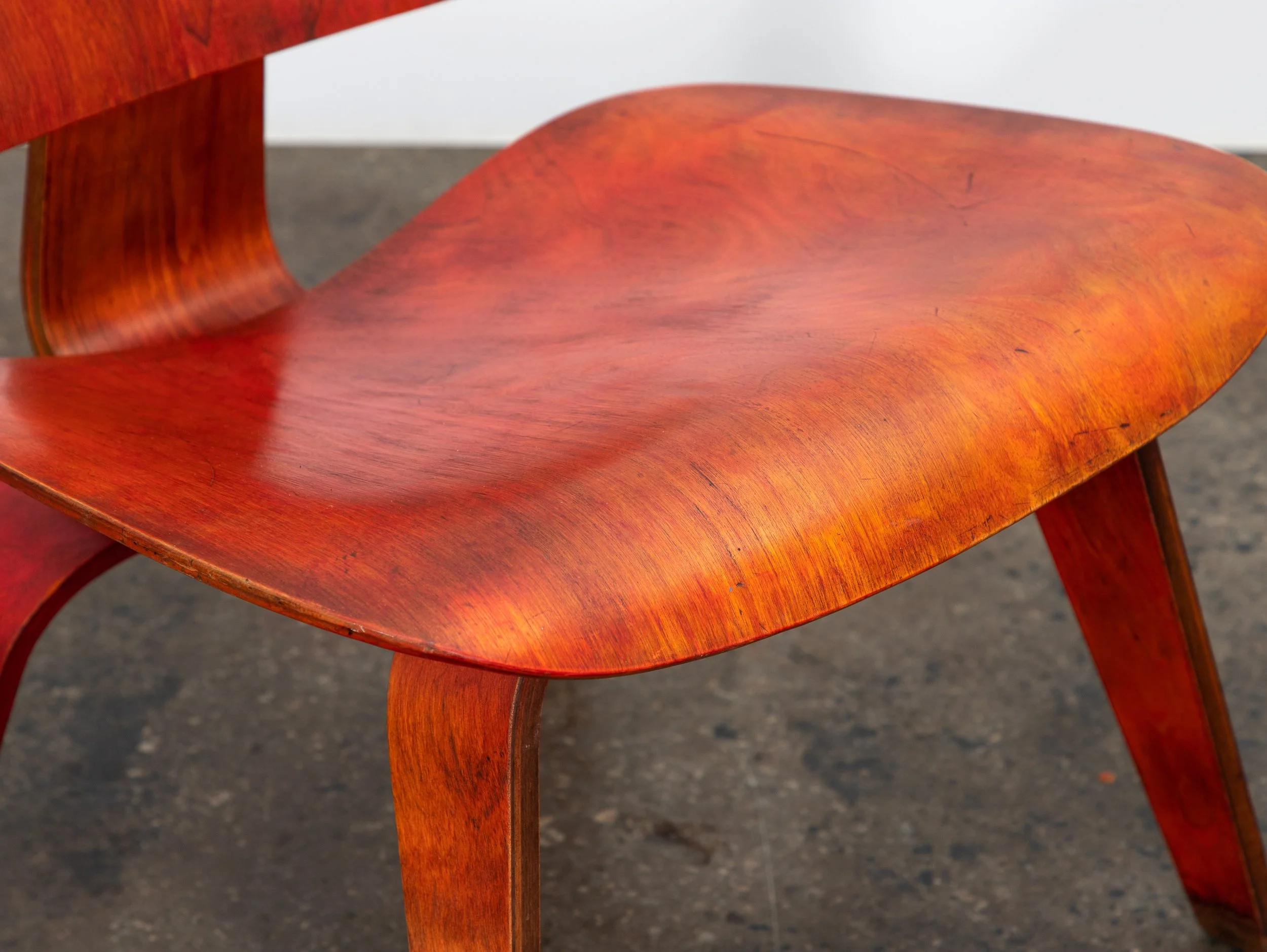
Honest Patina
We value condition, but we don’t erase history. The best pieces feel cared for, not overcorrected.

Hand Selected
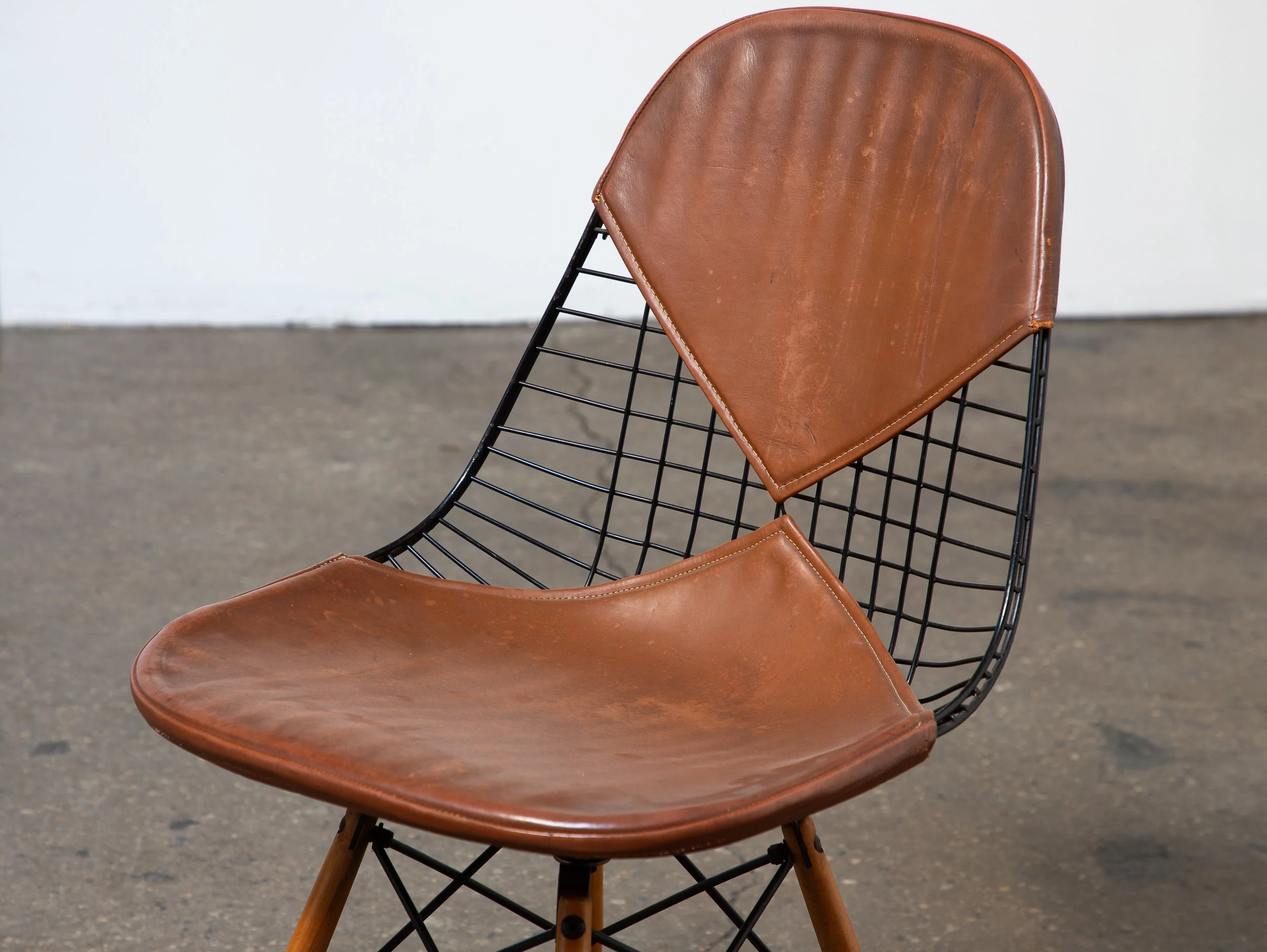
We select pieces for authenticity, materials, and character—so collectors, designers, and first-time buyers can choose with confidence.
Design in Context
Labels.
Materials.
Production changes.
The details are small. The differences are not.
Preserve honestly.
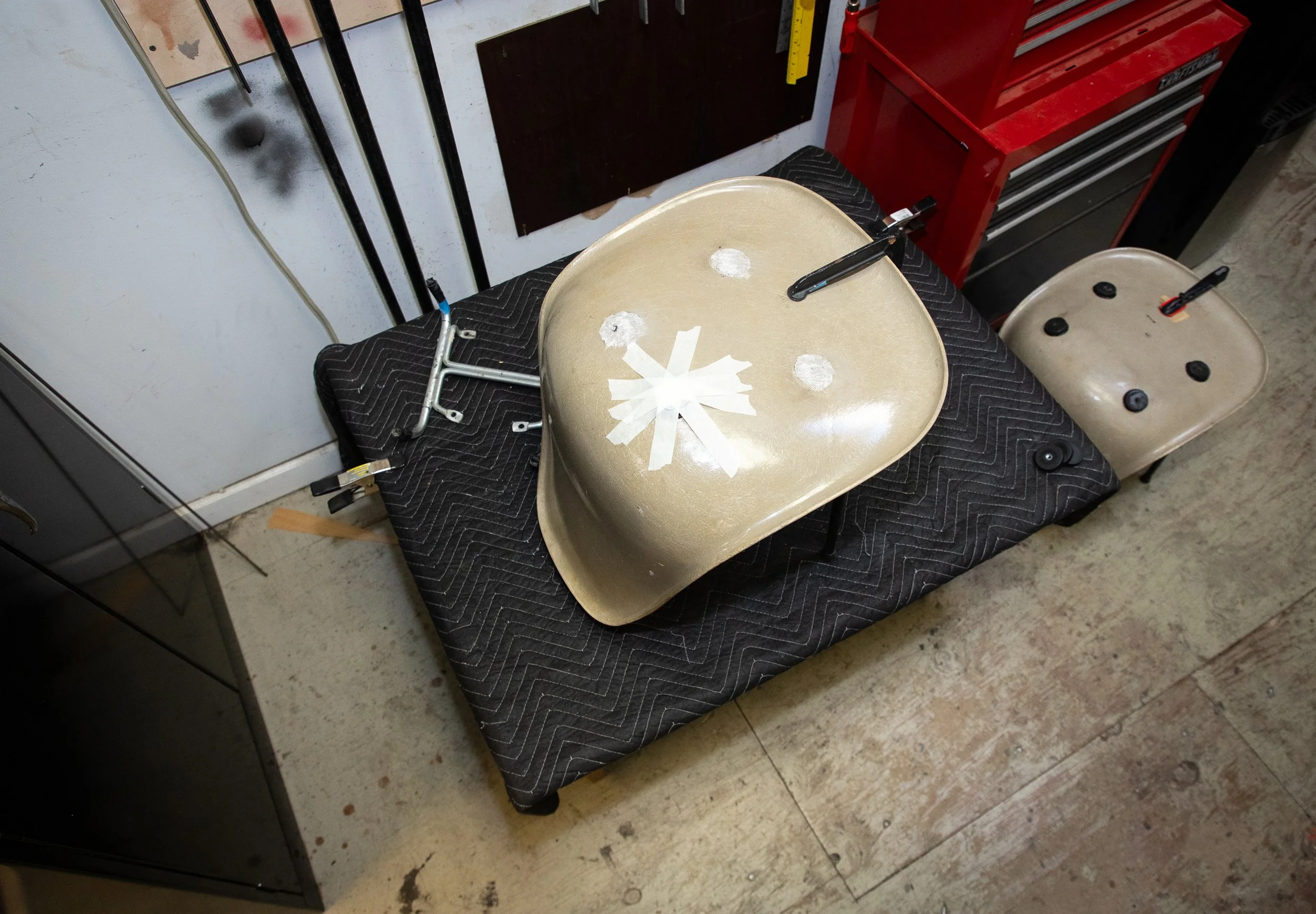
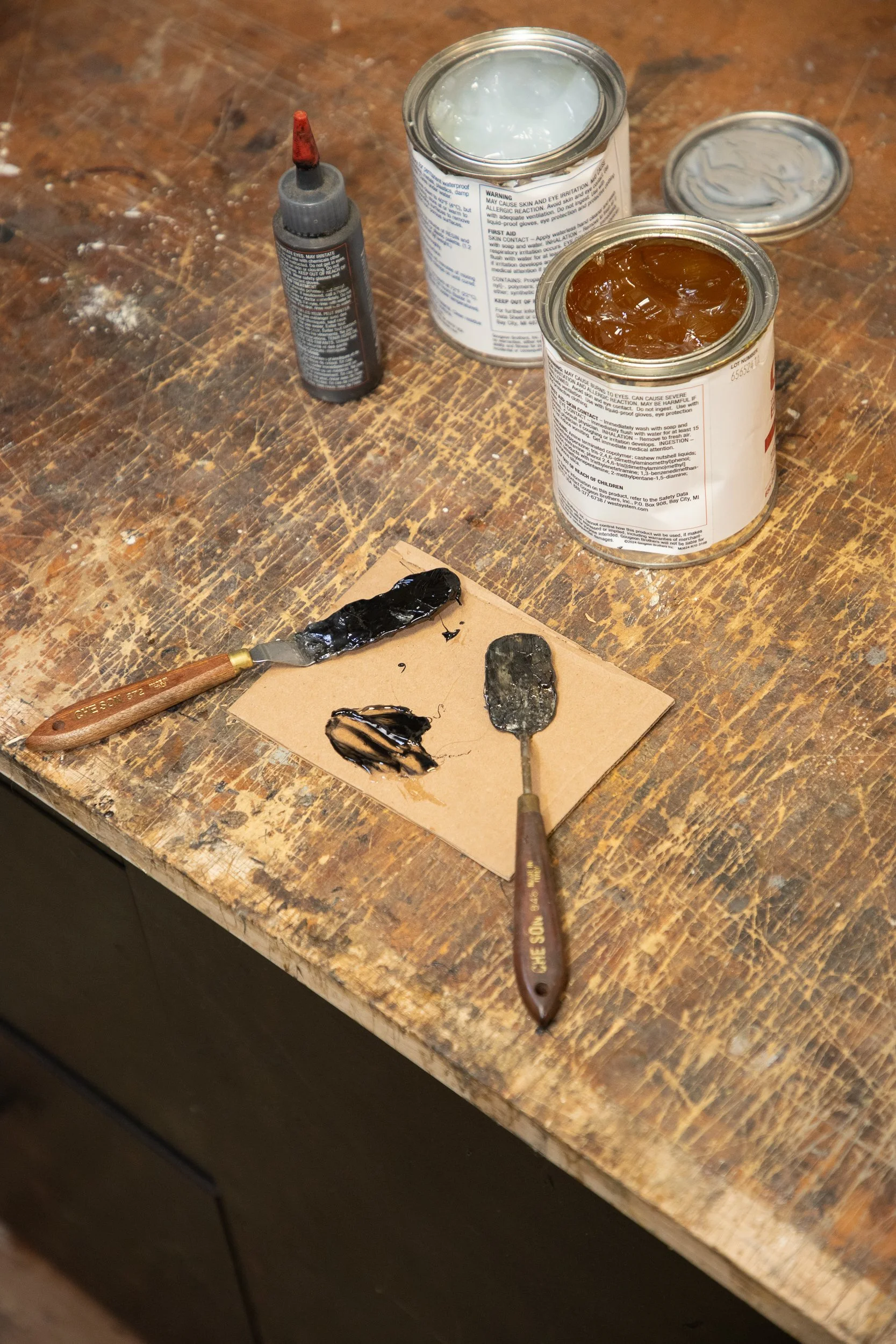
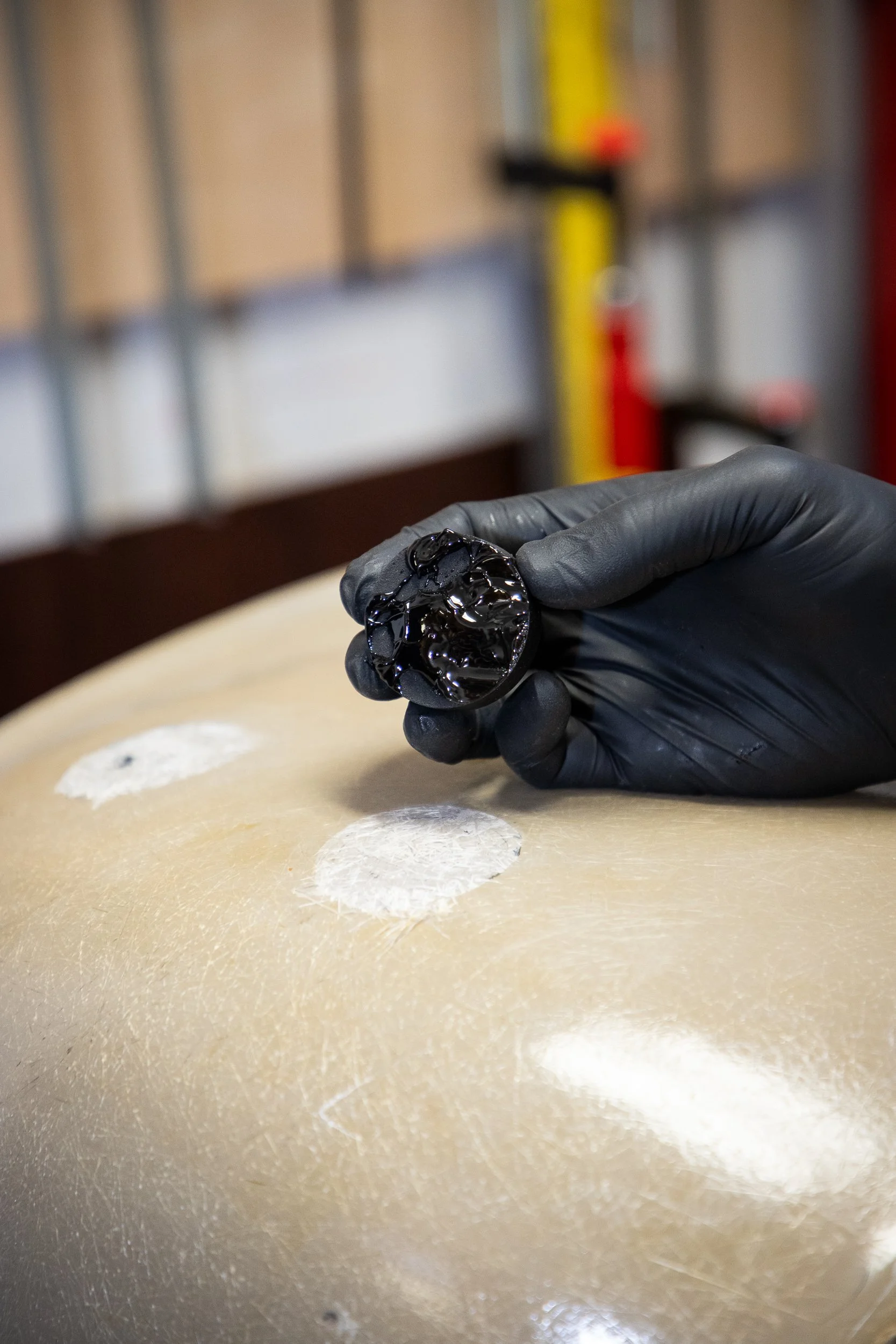
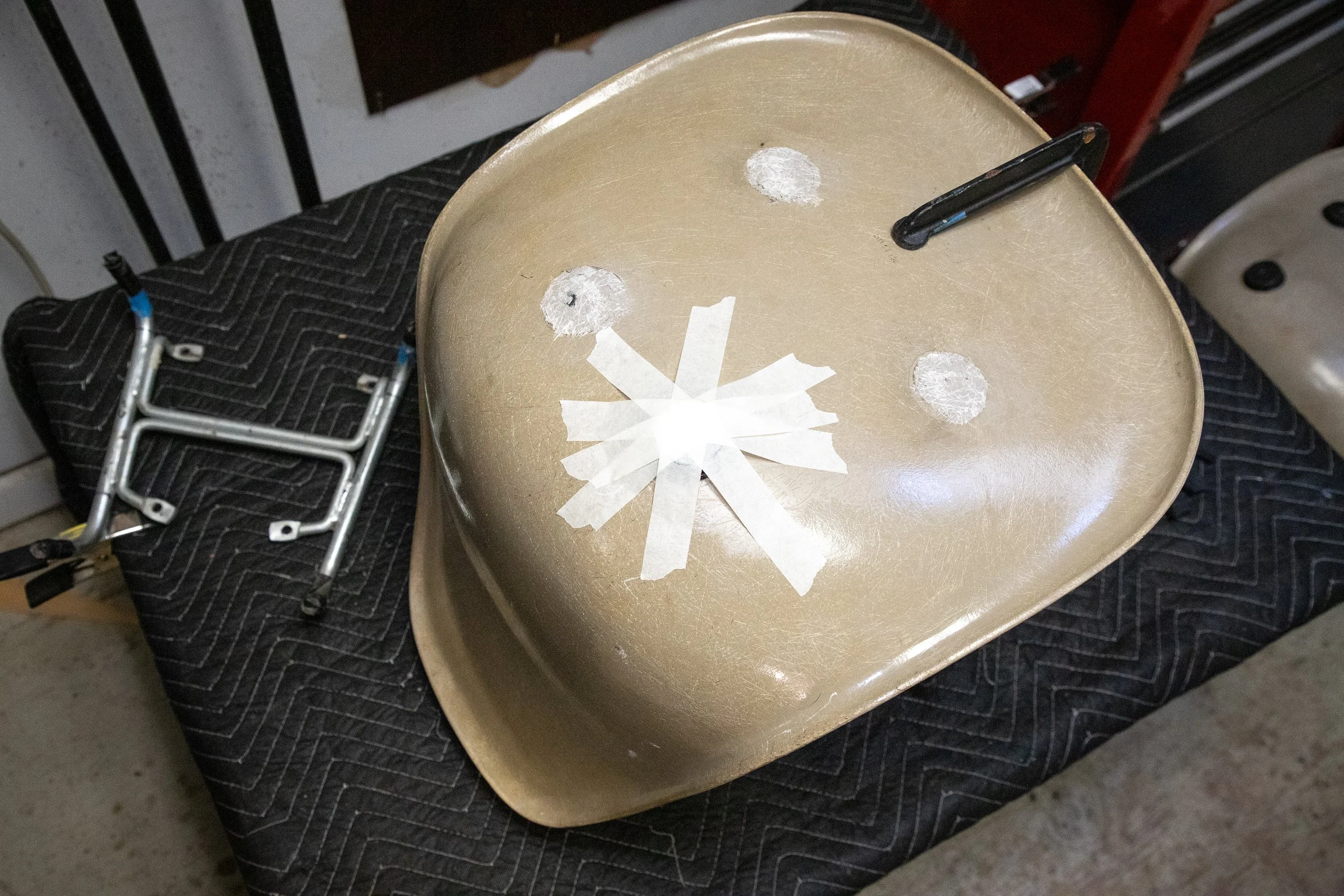
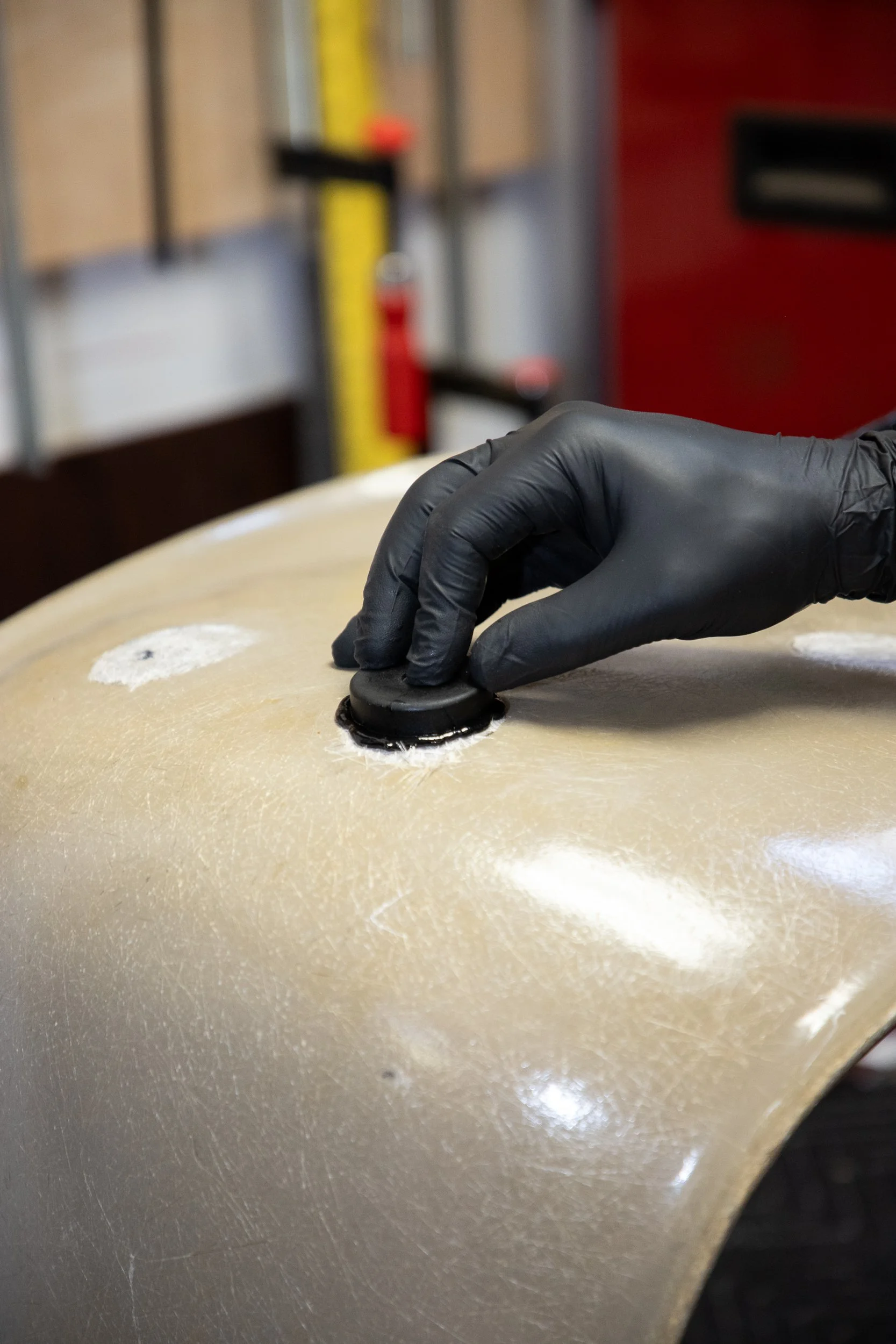
We clean, stabilize, repair, and pair pieces with care, while preserving the qualities that make each chair distinct.
The result is furniture that feels fresh enough for daily use and honest enough for serious collectors.
Start with what’s real.
Explore authentic Eames pieces selected for material, form, condition, and character.