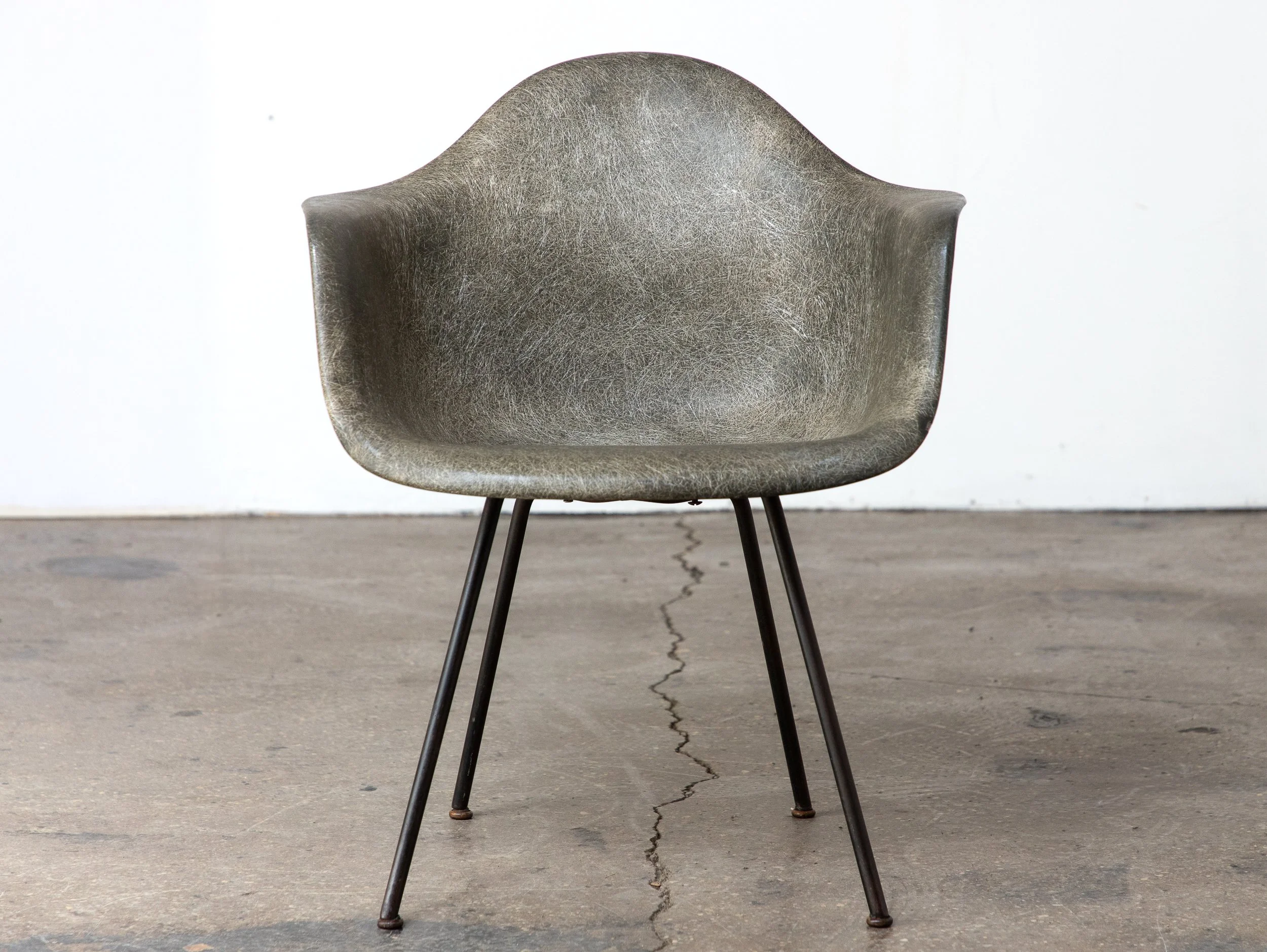
The Eames Shell Chair Color Guide
More Than Color
Few furniture designs are as closely associated with color as the Eames fiberglass shell chair. Introduced in 1950, the chair combined a revolutionary material with a growing palette of distinctive hues, creating a visual language that remains instantly recognizable more than seventy years later.
At first glance, identifying an Eames shell chair color seems straightforward. Parchment is Parchment. Seafoam is Seafoam. Elephant Hide Grey is Elephant Hide Grey.
In practice, it is rarely that simple.
Unlike painted furniture, the color of a fiberglass shell chair is embedded within the material itself. Pigment is mixed directly into the fiberglass, allowing the fibers to remain visible beneath the surface. As a result, two chairs produced in the same color can appear remarkably different.
Some shells appear dense and nearly opaque. Others reveal dramatic fiber patterns that shift with changing light. Decades of sunlight, use, and environment add further variation, softening colors and giving each shell its own character.
For collectors, color is only the starting point. Material, texture, and age are equally important to understanding what makes each chair unique.

Color
The original Herman Miller pigment. From Parchment and Seafoam to Elephant Hide Grey and Red Orange, color is often the first thing we notice.
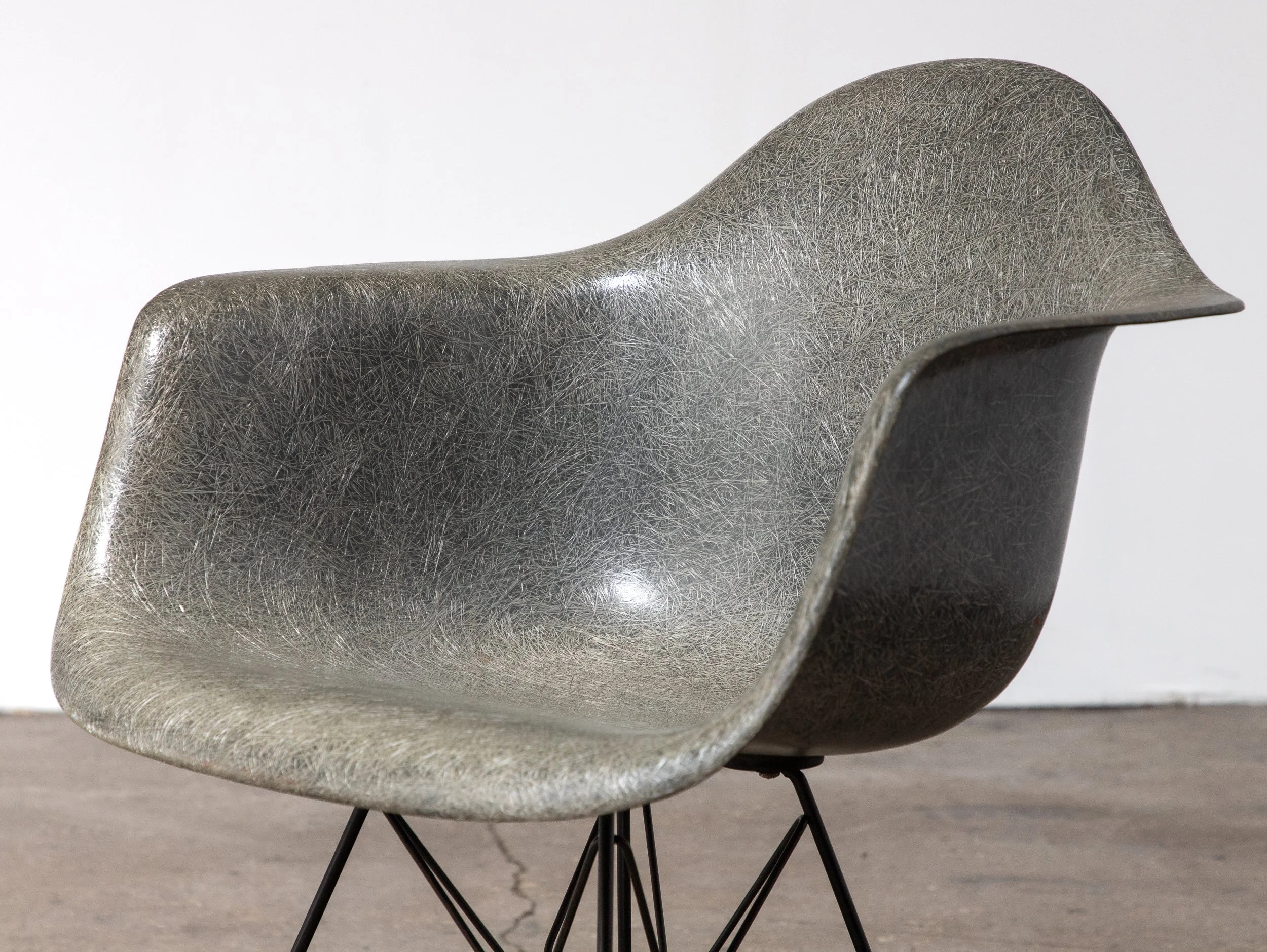
Fiber
The visibility of the fiberglass beneath the surface. Some shells appear nearly solid while others reveal dramatic fiber patterns.

Patina
The effects of time, light, and use. Decades of aging soften colors, alter surfaces, and give each shell its own character.